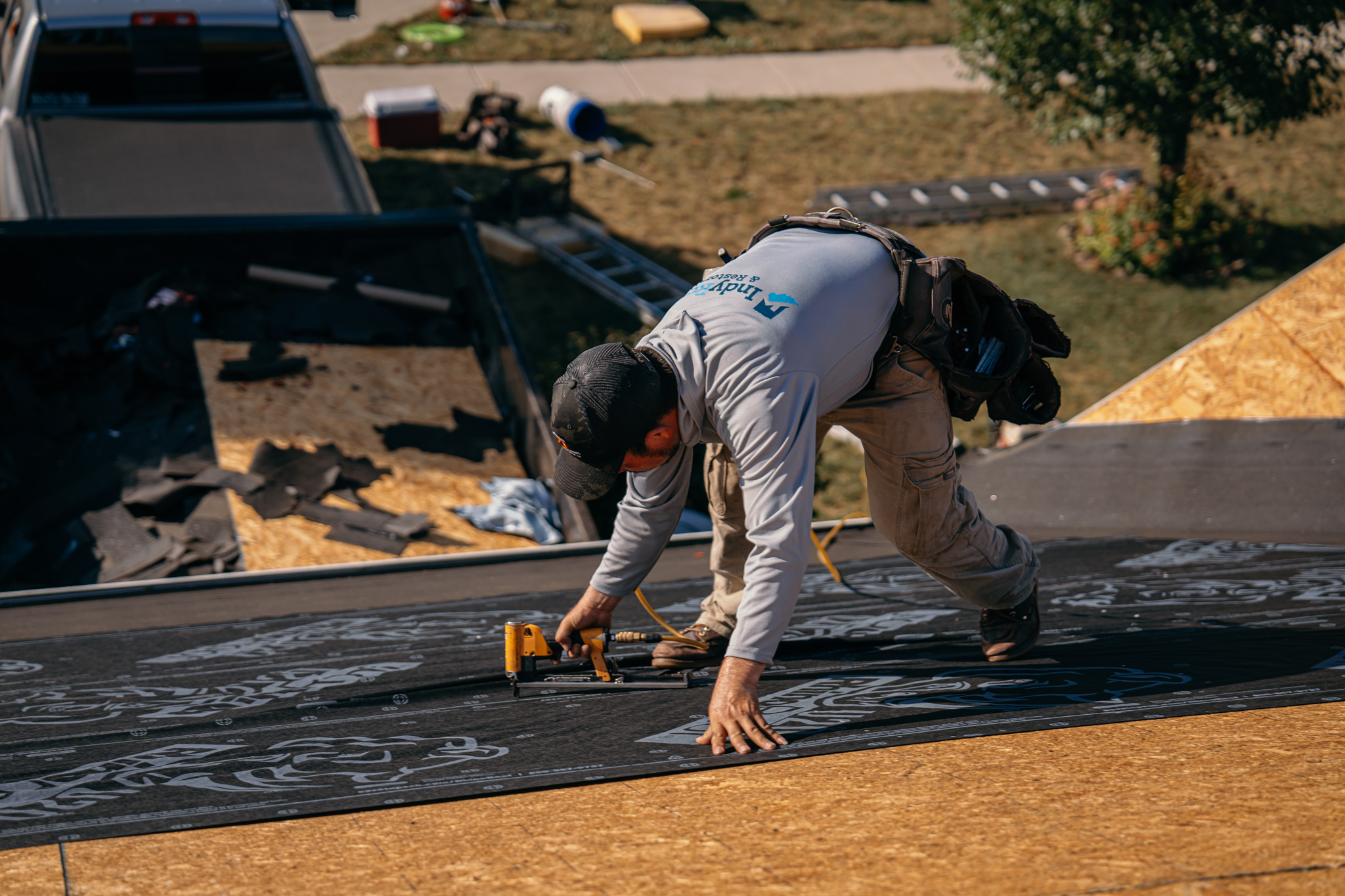
The Square as the Unit of Roofing
To understand how a roof is priced, you have to understand the square, because it is the fundamental unit the roofing trade is built on. A square is a hundred square feet of roof area, and nearly everything in roofing, measuring, ordering material, quoting labor, flows through it. When a homeowner asks what a roof costs, the answer is really a function of how many squares the roof has and the price per square. For a Lagro homeowner, grasping the square is the single most useful step toward reading a quote and understanding why a roof costs what it does.
Where the Square Comes From
The square exists for practical reasons. Roofs are large, and measuring or pricing them in single square feet would be unwieldy, so the trade settled on the hundred-square-foot square as a convenient unit. Roofing materials are often packaged and sold in quantities tied to the square, with a certain number of bundles covering one square, so the unit carries through from the manufacturer to the contractor to the homeowner. This consistency is why the square is used at every stage. For a Lagro homeowner, the square is less an arbitrary term and more the natural unit that the whole roofing process is organized around.
Building the Price Per Square
With the square count set, the price per square is what turns it into dollars. That price is built from the cost of the material for one square plus the labor to install it, adjusted for the roof's pitch and complexity, which affect how much time each square takes. The contractor's overhead, experience, and warranty also feed into it. So the per-square price is a composite figure, not just a material cost. For a Lagro homeowner, understanding that the per-square rate bundles material, labor, and the roof's characteristics explains why it varies so much between materials and between contractors.
Reading a Quote Through the Square
Putting it together, the square is the key that unlocks a roofing quote. Knowing that a square is a hundred square feet, that the count comes from the roof adjusted for pitch and waste, and that the per-square price bundles material and labor, lets a homeowner see exactly how a quote is built and compare bids meaningfully. The per-square model explains the math, but your real figure comes from a measured estimate, where a roofer counts your squares precisely. For a Lagro homeowner, that combination of understanding the model and getting a measured estimate is what makes pricing transparent.
Why No Two Per-Square Prices Match
Per-square prices vary from quote to quote, and the reasons are real. The material grade, local labor rates, the roof's pitch and complexity, accessibility, and the contractor's overhead, experience, and warranty all influence the figure. A higher per-square price may reflect better material or more thorough work, while a much lower one may use cheaper material or cut corners. For a Lagro homeowner, this is why a per-square number seen online or quoted by one contractor will rarely match another exactly, and why comparing them requires knowing the scope, the material, and the roof behind each figure.
Why Roofers Add Waste
The measured area is not the whole story, because installing a roof wastes some material. Shingles must be cut to fit at edges, valleys, and angles, and the starter course and ridge caps consume material beyond the field. To cover this, roofers add a waste factor, typically around ten to fifteen percent, to the square count when ordering and quoting. A complex roof with many cuts wastes more and carries a higher factor, while a simple roof wastes less. For a Lagro homeowner, the waste factor is why the squares quoted can exceed the bare measured area, and it is a normal, necessary part of doing the job right.
Per-Square as a Comparison Tool
Despite the variation, per-square pricing is a powerful way to compare quotes. By dividing each quote's total by the square count, you get an effective per-square cost that puts bids on a common scale, revealing whether one is unusually high or low. The essential caveat is to compare like with like, ensuring each quote covers the same material grade and scope, since a low per-square figure that omits tear-off or uses lesser material is not truly cheaper. For a Lagro homeowner, the per-square lens, used carefully, cuts through differing totals to show the real relative value of competing quotes.
Material and Labor in Every Square
Each square's price contains both material and labor, and the split matters. For asphalt, the material for a square is relatively modest, while the labor to install it is often a large share, which is why the installed per-square cost is well above the material-only price. For premium materials like tile and slate, both the material and the specialized labor are expensive, pushing the per-square cost much higher. For a Lagro homeowner, recognizing that labor is a big part of every square clarifies why roofing is labor-intensive work and why the installed cost, not the material price, is what determines the quote.
How Pitch Changes the Math
Once the footprint is known, pitch enters the calculation. A steeper roof has more surface area than the flat ground it covers, because the slope stretches the distance. Roofers apply a multiplier based on the pitch to convert the footprint into the true roof area. A low-slope roof adds little, while a steep roof adds substantially. This is why two homes with identical footprints can have very different square counts and costs if their roofs differ in steepness. For a Lagro homeowner, pitch is a major reason an accurate square count requires measuring the real roof rather than guessing from the home's dimensions.
Turning Squares Into a Total
The total emerges from multiplying the price per square by the number of squares, including waste. That product is the core of the roofing cost. Contractors then add certain costs that may sit outside the per-square rate, such as tearing off and disposing of the old roof, the permit, and any decking repair discovered during the work. These can appear as separate line items. The sum is the quote. For a Lagro homeowner, this calculation is the bridge between the per-square model and the final price, and knowing it lets you see how the pieces of a quote fit together.
Measuring the Roof, Not the House
A common misunderstanding is that a roof's size matches the home's floor area, but they are different. A roofer measures the actual roof surface, plane by plane, then sums and divides by a hundred to get the squares. A sprawling single-story home can have more roof than a compact two-story one, and overhangs add area too. The roof's footprint, not the living space, is what counts, before pitch is even considered. For a Lagro homeowner, this distinction explains why the square count, and the cost, relate to the roof itself rather than to the square footage listed for the house.
The Fixed Costs Outside the Square
Not everything in a roof replacement scales with the square count. Some costs are fixed or separate, like the permit, the dumpster and disposal, and mobilization, and some are contingent, like decking replacement, which depends on what the crew finds. These do not multiply with squares the way material and labor do, so they are often handled as their own line items. For a Lagro homeowner, understanding that a quote combines per-square costs with these fixed and contingent items explains why two roofs with the same square count can still differ in total, and why an itemized quote is clearer than a single number.